
Why Maintaining Artificial Grass Is Essential for Your Outdoor Space
- Mark Kelsch
- Feb 10
- 4 min read

Artificial grass has become a popular choice for many homeowners and pet owners in Phoenix, AZ, and nearby areas such as Scottsdale, Peoria, and Glendale. It offers a clean, green, and low-maintenance alternative to natural lawns. However, even synthetic turf requires care to keep it looking its best and to ensure it remains safe and comfortable for pets and family members. Understanding why maintaining artificial grass is important can help you protect your investment and enjoy your outdoor space for years to come.
The Importance of Maintaining Artificial Grass
Maintaining artificial grass is not just about aesthetics. Proper care extends the lifespan of the turf, prevents damage, and keeps the surface safe for pets and children. Without regular upkeep, debris, pet waste, and dirt can accumulate, leading to unpleasant odors, bacteria growth, and a worn appearance.
For pet owners, this is especially critical. Pets can cause wear and tear on the turf, and their waste needs to be managed carefully to avoid health risks. Regular cleaning and maintenance help prevent the buildup of harmful bacteria and keep the area hygienic.
Additionally, maintaining artificial grass helps preserve its drainage capabilities. Good drainage prevents water pooling, which can cause mold or mildew and damage the turf backing. This is particularly important in regions like Phoenix, where occasional heavy rains can occur.

Close-up view of artificial grass fibers showing pet hair and debris accumulation
Best Practices for Maintaining Artificial Grass
To keep your artificial grass in optimal condition, follow these practical steps:
Remove debris regularly: Leaves, twigs, and dirt should be cleared away using a leaf blower, broom, or rake. This prevents organic matter from decomposing on the surface.
Clean pet waste promptly: Solid waste should be picked up daily. Urine spots can be rinsed with water to dilute and reduce odors.
Disinfect occasionally: Use a pet-safe disinfectant or a mixture of water and vinegar to sanitize the turf, especially in areas where pets frequently play or rest.
Check for damage: Inspect the turf for any tears, loose seams, or worn areas. Early repairs can prevent more extensive damage.
Maintain infill levels: If your turf has infill material, such as sand or rubber granules, ensure it remains evenly distributed to support the grass fibers and provide cushioning.
These steps will help maintain the appearance and functionality of your artificial lawn, making it a pleasant and safe environment for your pets and family.
How often should artificial turf be brushed?
Brushing artificial turf is a key part of its upkeep. It helps keep the grass fibers upright, prevents matting, and distributes infill evenly. The frequency of brushing depends on the level of use and environmental factors.
For residential lawns with moderate foot traffic and pets, brushing once every two weeks is generally sufficient. In high-traffic areas or homes with multiple active pets, brushing may be needed weekly. Use a stiff-bristled broom or a specialized turf brush for best results.
Brushing should be done in different directions to lift the fibers uniformly. Avoid using metal rakes or tools that could damage the turf backing or fibers.
Regular brushing not only improves the look of your artificial grass but also enhances its durability and comfort.
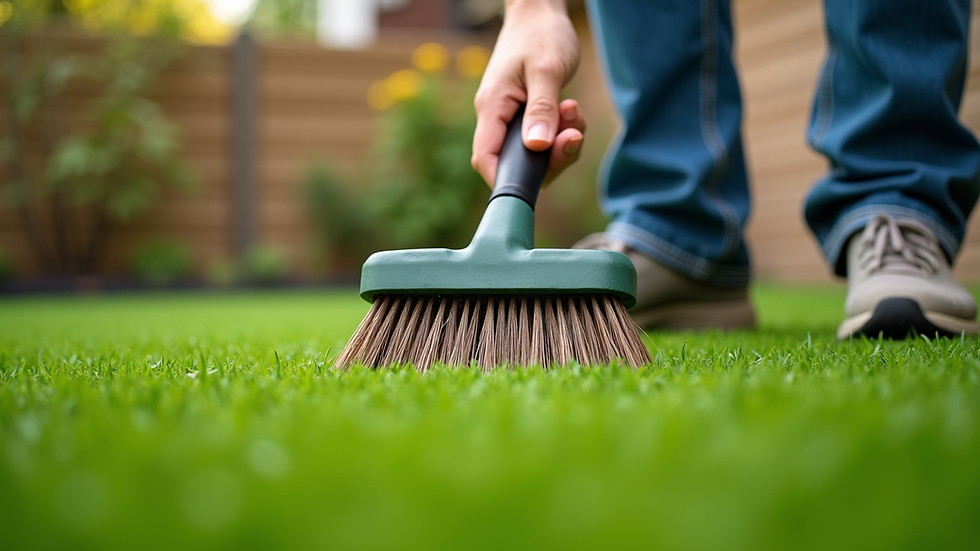
Eye-level view of a person brushing artificial turf to maintain fiber uprightness
Addressing Common Challenges with Artificial Turf
Artificial turf is durable but not immune to challenges. Understanding these issues and how to address them will help you maintain a healthy lawn:
Pet odors: Urine can cause persistent smells if not cleaned properly. Rinse affected areas with water and use enzymatic cleaners designed for pet waste.
Weeds: Although rare, weeds can grow around the edges or through drainage holes. Remove them manually or use a weed killer safe for synthetic turf.
Heat retention: Artificial grass can become hot under direct sunlight. Providing shaded areas or watering the turf occasionally can help cool it down.
Stains: Food, drinks, or other spills should be cleaned promptly with mild soap and water to avoid staining.
Compaction: Heavy use can compact the infill, reducing cushioning. Regular brushing and infill top-ups can alleviate this.
By proactively managing these challenges, you can keep your artificial lawn looking fresh and functional.
Enhancing the Longevity of Your Artificial Lawn
To maximize the lifespan of your artificial grass, consider these additional tips:
Schedule professional cleanings: Annual or biannual professional maintenance can deep clean the turf, remove embedded dirt, and restore infill levels.
Protect from sharp objects: Avoid dragging heavy furniture or sharp tools across the turf to prevent tears.
Use pet-friendly products: When cleaning or treating the turf, choose products that are safe for animals to avoid health risks.
Monitor drainage: Ensure that water flows freely through the turf to prevent pooling and damage.
Educate family members: Encourage everyone to follow maintenance routines and avoid behaviors that could harm the turf.
Consistent care will keep your artificial grass looking vibrant and functional for many years.
Creating a Safe and Enjoyable Outdoor Space
Maintaining artificial grass is essential for creating a safe, clean, and enjoyable outdoor environment. For pet owners, this means a space where pets can play freely without the risk of infections or discomfort. For families, it means a beautiful lawn that requires minimal effort but offers maximum enjoyment.
By following the recommended maintenance practices, you ensure that your artificial lawn remains a valuable asset to your home. It will continue to provide a lush, green appearance and a comfortable surface for all your outdoor activities.
For more detailed guidance on artificial turf maintenance, consider consulting with local professionals who understand the specific needs of turf in the Phoenix area.
Maintaining your artificial grass is an investment in your home’s beauty and your family’s well-being. With proper care, your synthetic lawn will remain a source of pride and pleasure for many seasons to come.



Comments